
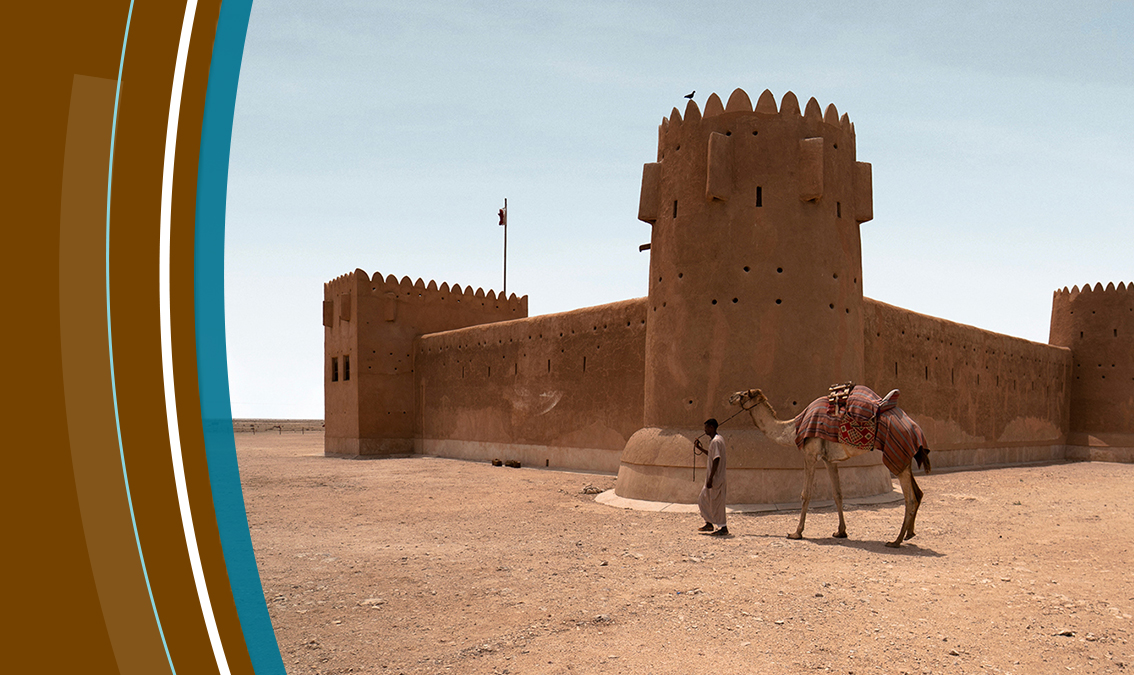
Qatari History and Heritage
SymbiosisAbout this course
This course aims to familiarize its audience with the evolution of life, culture, society and politics on the Qatari peninsula from ancient to contemporary times. In this regard, it will focus on history, geography, archeology and culture. Its audience will gain an extensive understanding of the unique aspects of the evolution of social life in Qatar over centuries, as well as of Qatar’s interaction with surrounding regions, such as the Gulf, the Arabian Peninsula, the Indian Ocean region, Africa, Persia, the wider Islamic and Arab worlds and Europe. This course also provides an extensive insight into traditional Qatari society, culture, religion and economy during the pre-modern era of pearl diving and after the discovery of oil. Of particular focus here will be the intersection of geography and economy with regards to the making of traditional society and culture inside the Qatari desert heartland and within the coastal towns and villages.
History forms the core aspects of this course. The major topics of discussion here will be life on the Qatari peninsula during the Pre-Islamic and the Early Islamic eras. In later centuries, extensive attention is given to politics and society in Qatar as a major part of the Arabian coastal region often referred to as Al-Bahrain (The Two Seas) and the region of Al-Ahsa from the 16th to the 19th century. An important part of the course curriculum will be devoted to examining the influence of major European and Islamic empires on Qatar and its surrounding region, in particular the British and the Ottomans. Another major topic of concern will be the impact of Great Britain and the British Empire in India on Qatar’s political development from around 1820 to 1971. In similar respects, the extensive focus will be given to the history of Qatar as a district of the Ottoman Empire during 1871–1913 and how it laid the foundation for its emergence as a sovereign state.
With regards to the latter, the course aims to highlight the struggle of Qataris to develop their own traditional sheikhdom and later independent modern state. Of key importance to this course is also the discovery of oil and gas and its impact on society and politics. The last modules of this course will focus on contemporary Qatar, its society and its role as a key player in the Gulf, the Arab and Islamic worlds, and the larger international arena in areas such as politics, economy, culture, religion and sport.
What you will learn
Upon completion of this course, you will be able to:
- Understand Qatar’s history and the various challenges it had faced from the ancient time when it was a simple pearl-diving society to Qatar today as a sophisticated independent state.
- Understand how Qatar was able to face and overcome the recurrent invasions and the devastating years of hunger.
- Learn about the evolution of life, culture, society and politics on the Qatari peninsula from ancient to contemporary times.
- Identify what makes contemporary Qatar the richest country in the world and its critical role in the Gulf.
Requirements
Add information about the skills and knowledge students need to take this course.
Course Staff
-

Dr. Peter Polak-Springer
Associate Professor of History at Qatar University
-
Dr. Mario Kozah
Associate Professor of History at QatarUniversity
-
Dr. Abdulqader Al-Qahtani
Professor of Modern and Contemporary History at Qatar University
-

Dr. Irene Theodoropoulou
Associate Professor of Linguistics
-

Dr. Maryam Abdulla N J Al Thani
Section Head of Reference and Information Services Qatar University Library
-
Dr. Raed Ahmed Hayajneh
Associate Professor of History at Qatar University
-

Dr. Ross Griffin
Assistant Professor of American Literature at Qatar University
-
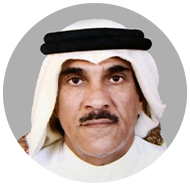
Prof. Saif Shaheen
Professor Qatar University
-

Dr. Sinan Marufoglu
Professor of Modern and Contemporary History at Qatar University
-

Dr. Shaikha Al-Kuwari
Assistant Professor of Anthropology at Qatar University
-

Dr. Haya Al-Thani
Director of Curatorial Affairs at the National Museum of Qatar
Frequently asked questions
What web browser should I use?
The Open edX platform works best with current versions of Chrome, Firefox or Safari, or with Internet Explorer version 9 and above.
See our list of supported browsers for the most up-to-date information.
Question #2
Your answer would be displayed here.
Pursue a Verified Certificate to highlight the knowledge and skills you gain ($49 USD)
-
Official and Verified
Receive an instructor-signed certificate with the institution's logo to verify your achievement and increase your job prospects
-
Easily Shareable
Add the certificate to your CV or resume.
-
Proven Motivator
Give yourself an additional incentive to complete the course.
-
Support our Mission
Relies on verified certificates to help fund free education for everyone globally.